

Lean Practice Book – Available Now
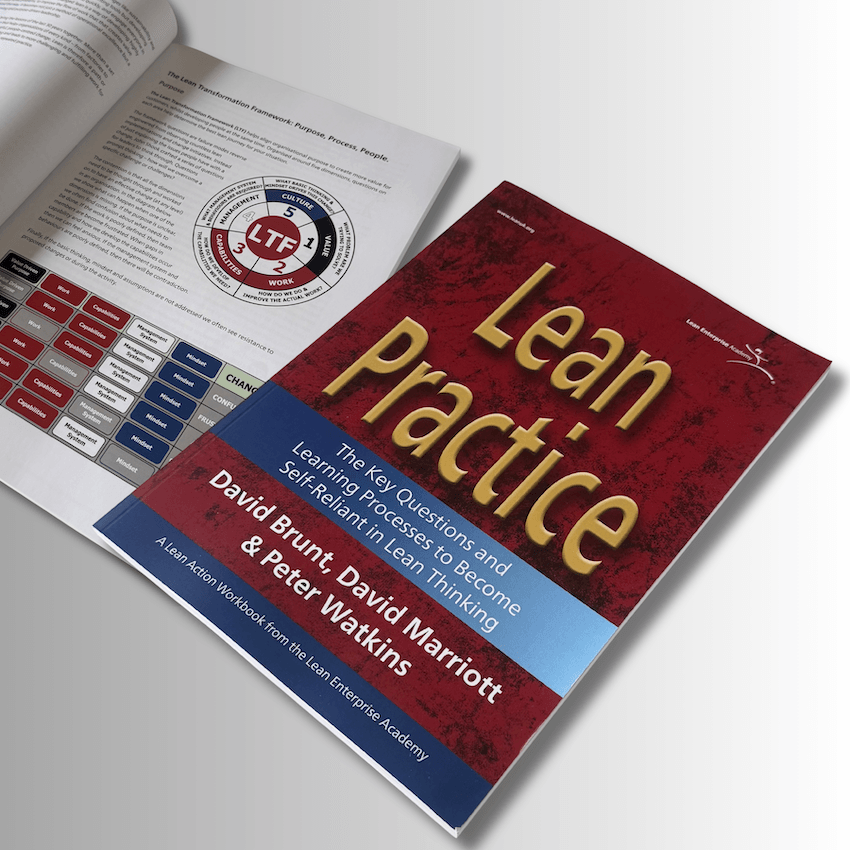
The Lean Practice Book distils over thirty years of learning, experimentation and application in lean thinking. The book tackles persistent questions; What is lean? Where do I start? How do I move beyond tools and develop lasting capability? Furthermore, it shows how lean transformation requires more than isolated programmes or consultant-driven toolkits.
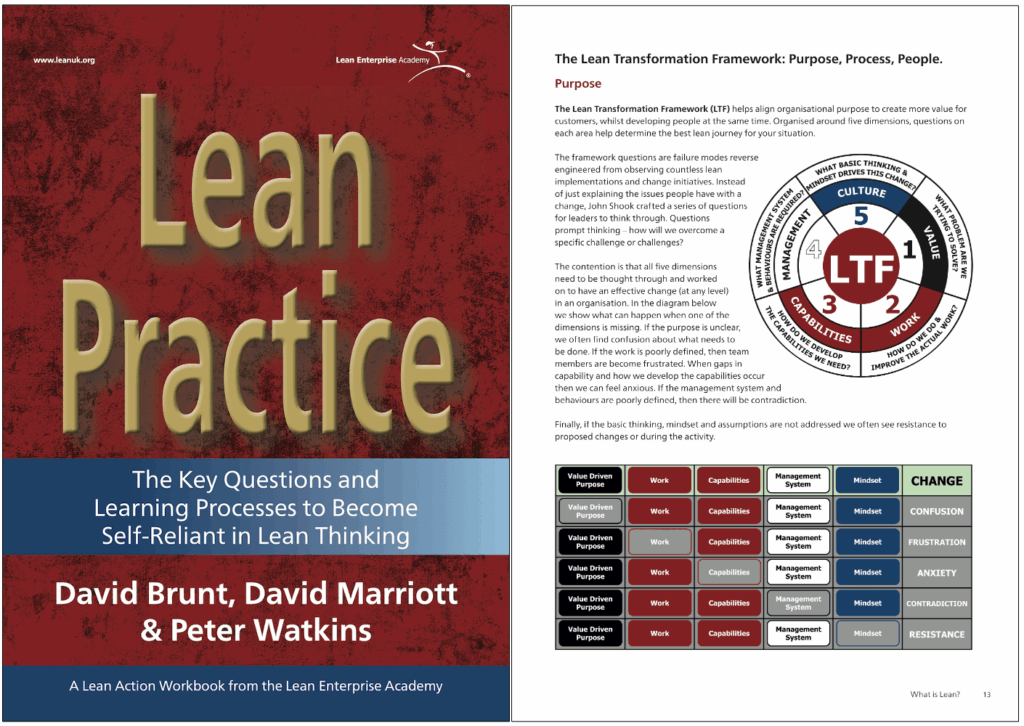
Guided by John Shook’s Lean Transformation Framework, the authors focus on 5 key dimensions, At its core, the framework provided a simple but powerful way to think about lean through a set of interconnected questions around purpose, work, capability, management and thinking. Those questions became the foundation for the experiments, learning processes & materials, and practical approaches that ultimately shaped Lean Practice.

-
 £44.00
Why the Lean Practice Book?
Clarifies Lean Thinking
Goes beyond tools by addressing fundamental questions about what lean is, where to begin, and how to develop practical capability instead of relying on isolated programmes.
Guided by the Lean Transformation Framework
Introduces John Shook’s Lean Transformation Framework as a visual, question-led structure for thinking, acting, and reflecting on lean, making complex concepts easier to apply.
Develops Capability and Self‑Reliance
Helps leaders, managers and frontline staff build the skills needed to diagnose gaps, design better work processes, and sustain improvements without constant external support.
Connects Purpose, Process and People
Shows how value-driven purpose, work design and process improvement, capability development, management behaviours and underlying assumptions interact, transforming lean from a set of disconnected tools into a coherent system.
Practical and Experience‑Based
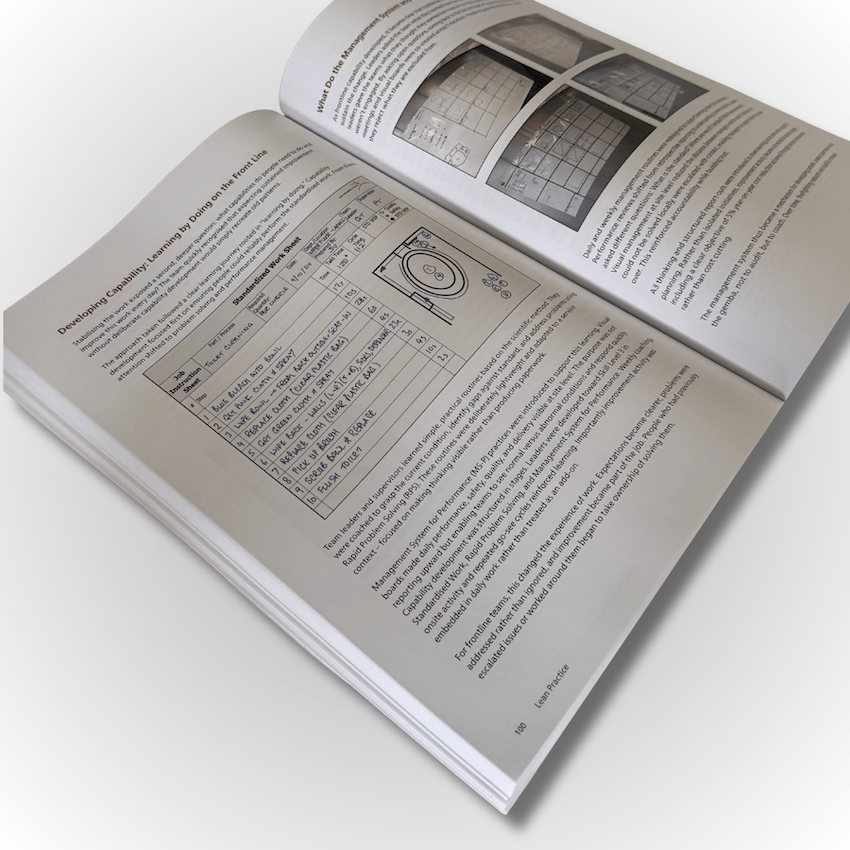
Draws on three decades of action research and coaching across multiple industries, providing practical examples and experiments that readers can try in their own organisations.
Enables Organisational Learning
Encourages reflection at the organisational, team and personal levels, helping readers learn how to improve their own work, coach others and build a culture of continuous improvement.
What You’ll Explore in Lean Practice
Why Lean Practice Matters
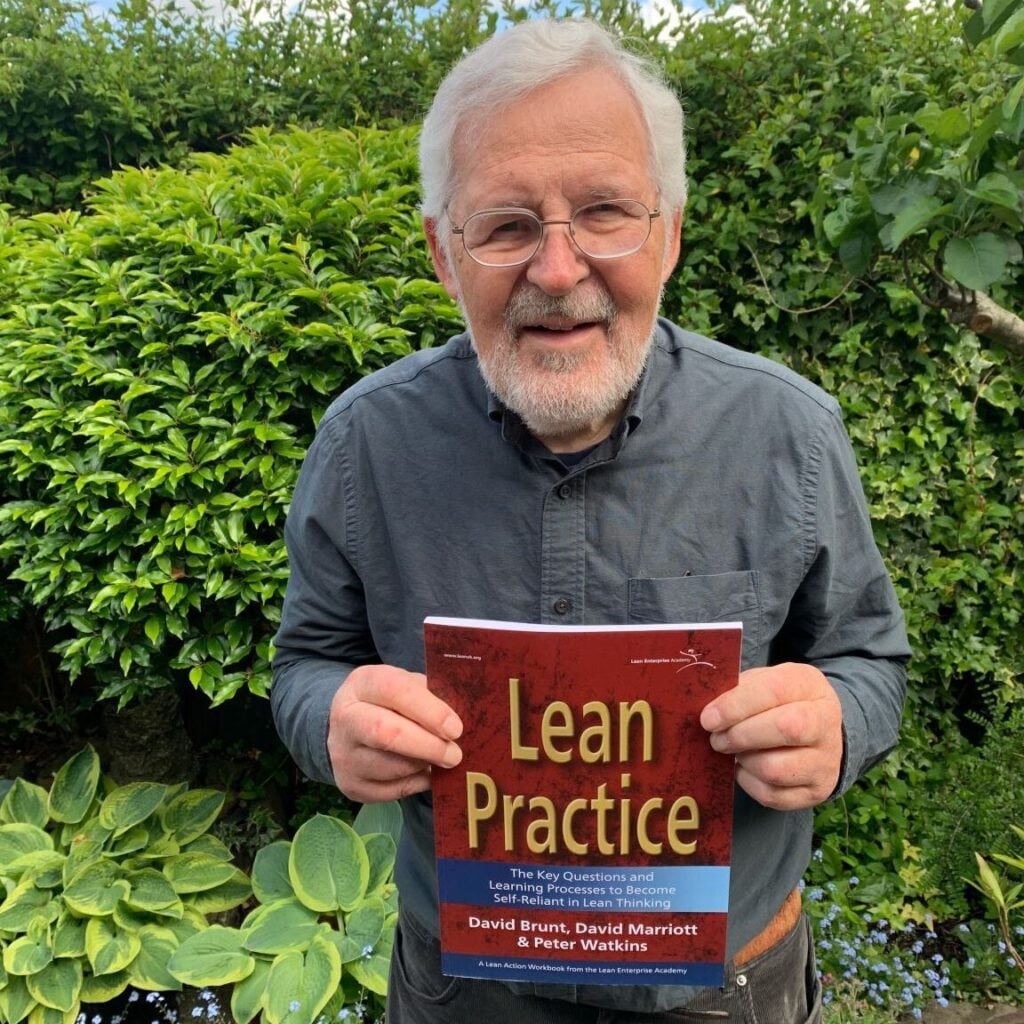
Lean Practice & Self‑Reliance – Daniel T. Jones
Many people begin their Lean journey after reading books like Lean Thinking, visiting organisations further along their transformation journey or experimenting with lean tools. Eventually, leaders realise lean cannot be delegated to consultants or sustained through programmes alone, it requires leaders, managers, and teams to develop the capability to think differently about problems, work, and learning.
Lean Practice distils over thirty years of action learning from the authors’ work across Toyota, its suppliers, and the broader Lean Enterprise Academy community. It provides a practical way to understand and apply the LTF while supporting organisations to develop self‑reliance through structured learning, reflection, and daily practice. Ultimately, lean is a journey of learning, leading, and becoming capable of improving your own work and helping others do the same.
A Framework for Lean Thinking & Practice – John Shook
Foundational works such as Lean Thinking and The Machine That Changed the World introduced lean as more than a set of tools, it is a fundamentally different way of thinking about work, management, and improvement. However, Lean capability emerges only through practice: disciplined problem solving, experimentation and reflection in real-world conditions.
Lean Practice applies this approach via the Lean Transformation Framework. Rather than prescribing a rigid implementation model, it offers a practical learning framework to help leaders and managers navigate real organisational challenges. Drawing on decades of experience across Toyota, manufacturing, services and organisational change, the book shows how Lean thinking and practice must cohere to move beyond isolated tools and build deeper organisational capability through learning by doing.

Toyota, Lean Thinking and Practical Application
Lean thinking has been heavily influenced by the Toyota Production System and by foundational works such as Lean Thinking and The Machine That Changed the World. However, Lean Practice is not intended to simply repeat existing explanations of lean manufacturing or Toyota methods.
Instead, the book focuses on helping people understand how to think about lean in practice, and how to apply these principles within their unique situation. The emphasis throughout is on practical learning, capability development and making lean thinking accessible to more people across different industries and environments.
Lean Practice Book Frequently Asked Questions
Frequently asked questions around Lean Practice.
What is Lean?
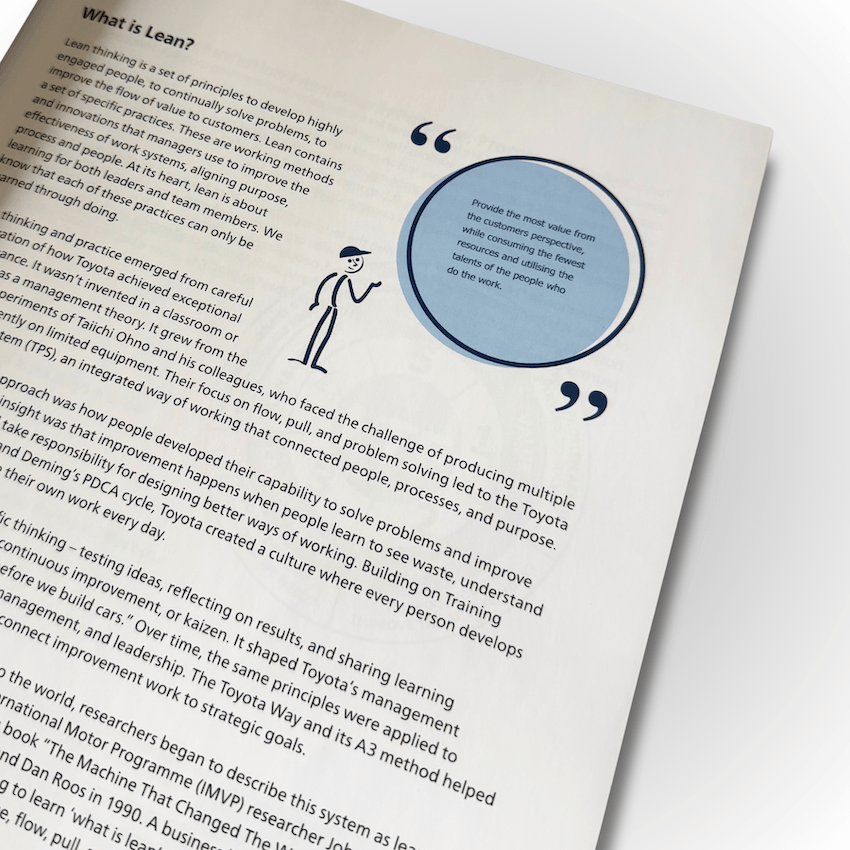
Lean is often misunderstood as a collection of tools, projects or cost reduction activities. In practice, lean is a way of thinking and learning focused on solving problems, improving work and developing people.
At its heart, lean is about creating value for customers while developing the capability of people within organisations to improve their own work. The aim is not dependency on consultants, programmes or isolated initiatives. Instead, the aim is self-reliance.
Lean Practice explores lean thinking as both an organisational system and a personal learning framework. Therefore the book provides a practical way to think about improvement through experimentation, reflection and learning by doing.
What is the Lean Transformation Framework?
The Lean Transformation Framework is a set of interconnected questions designed to help organisations think about purpose, work, capability, management and thinking. It provides a practical structure for thinking about improvement. Rather than starting with tools, the framework encourages leaders and teams to reflect on five critical dimensions:
1) What is the value-driven purpose? What problem are we trying to solve?
2) How do we design, do and improve the work that creates value?
3) How do we develop the capabilities required?
4) What management systems and behaviours are needed?
5)What mindset, thinking and assumptions guide our actions?
Overall, these questions help organisations avoid many of the common failure modes seen in lean transformations. Therefore the framework is not intended to be a compliance model or certification process. It is a practical learning and reflection framework designed to help organisations think more clearly about improvement and capability development. Lean Practice uses visuals, a diagnostic, examples and practical exercises to help readers explore these questions in their own situations. Learn more about the LTF in this short YouTube clip on our channel here.
Is this a Lean Manufacturing Book?
While the book draws on ideas connected to lean manufacturing and Toyota, it is designed for application across many industries and organisational settings.
How is Lean Practice different from other Lean Books?
Rather than simply explaining tools or methods, Lean Practice focuses on capability development, learning by doing and practical reflection.
Who is the Lean Practice Book for?
The book is written for leaders, managers, practitioners and individuals wanting to develop their understanding and capability in lean thinking and practice.